The first adventure I’ll be documenting is a backpacking trip to Caines Head, near Seward, Alaska. I’ve chosen this one as the first solely because it was recent, so I should have close to 100% recall, and because it was a relatively short and simple adventure.
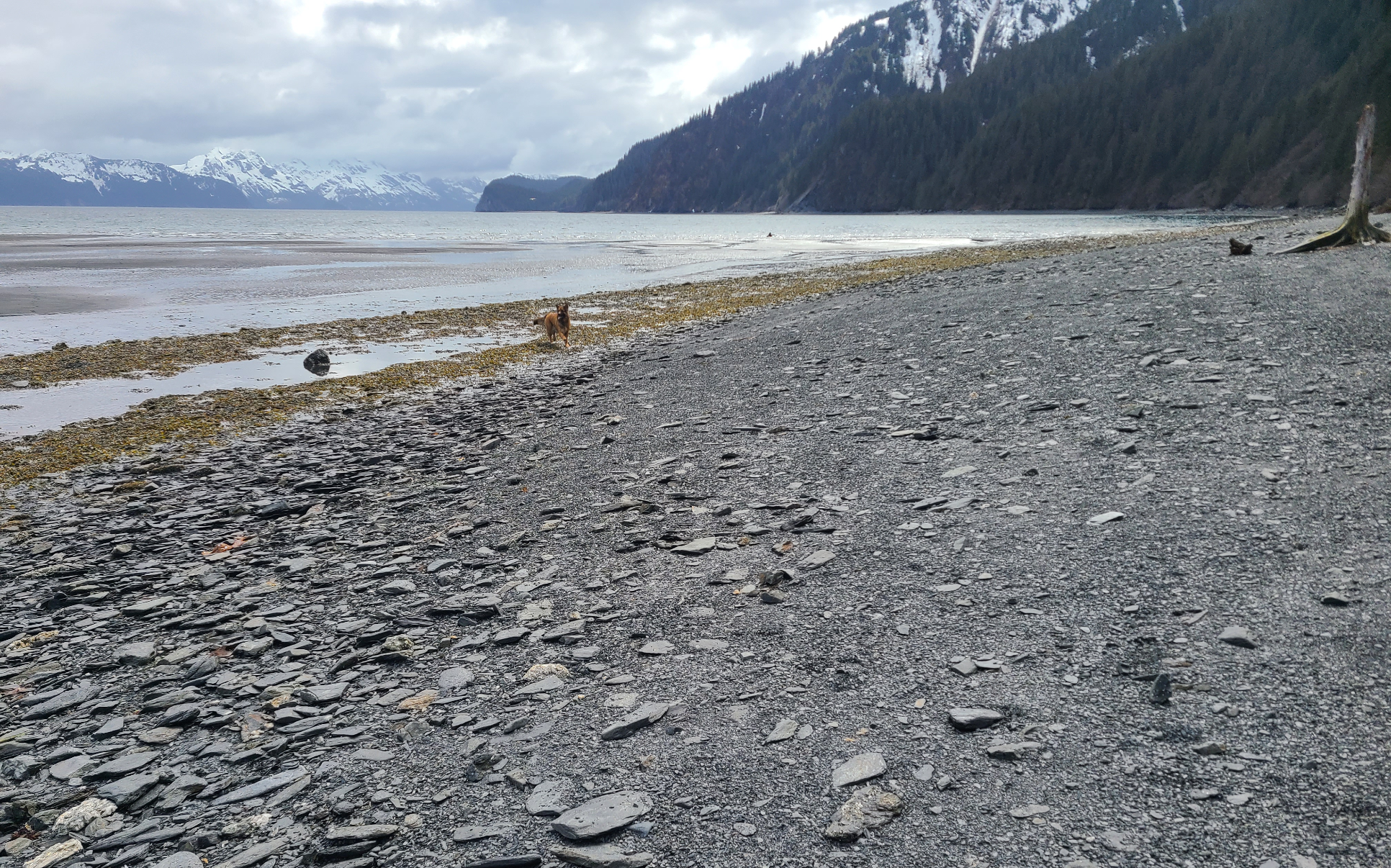
We started this adventure at Lowell Point, south of Seward, on May 13th, 2023. Along with us were Owen and the two dogs, Dot and Lila. We hiked south along the Caines Head trail, first up in the forest above the beach, and then down on the beach itself. The dogs loved chasing seagulls on the beach- often going all the way into the surf.
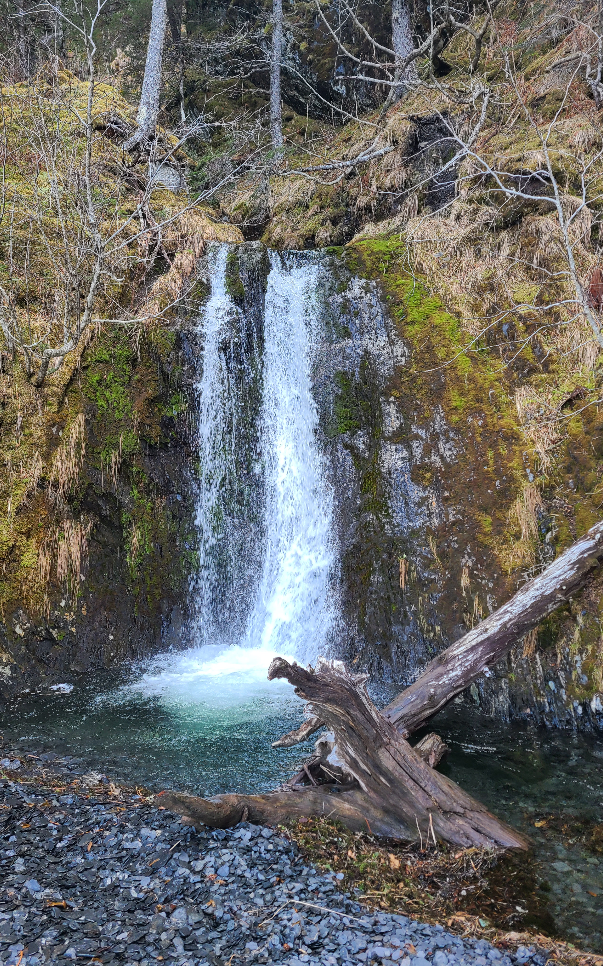
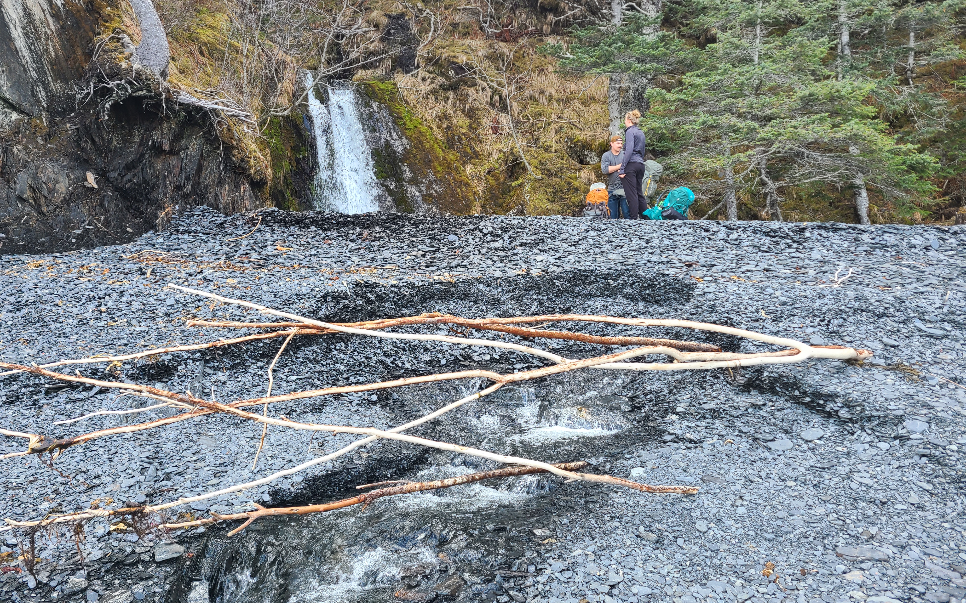
There are many seeps, drips, and waterfalls coming down from the cliffs above the beach. We stopped for a while at one particularly interesting one. The pool at the bottom of the waterfall has been dammed by rocks which have been pushed up by the surf. The pool drains through the beach rocks and collects again on the other side of the dam, slowly eroding the rocks away. No doubt the incoming tide will smooth the beach over again and the cycle will repeat with every tide. We climbed up above the falls and found that it continued up the side of the cliff as far as we could see- cataract after cataract.
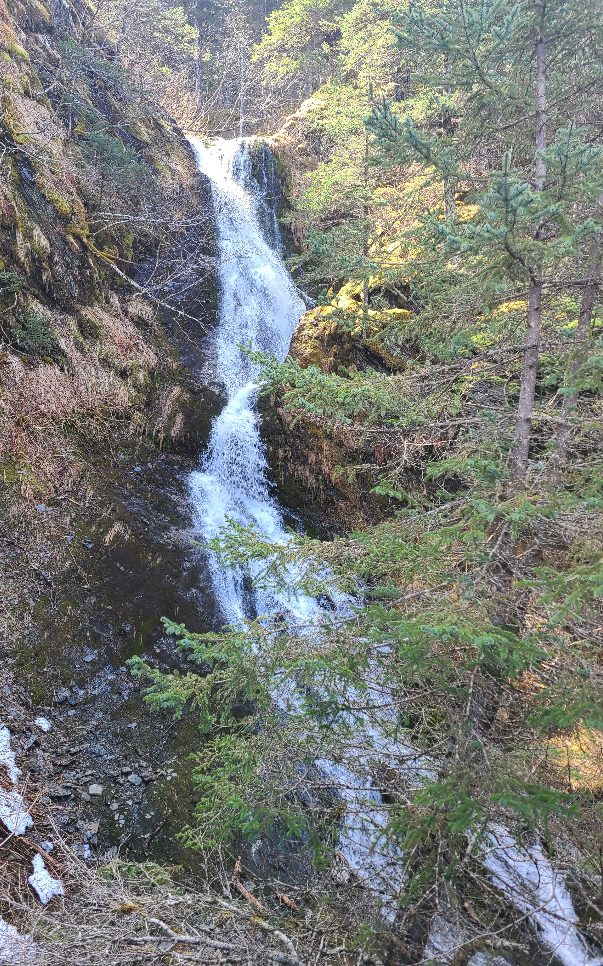
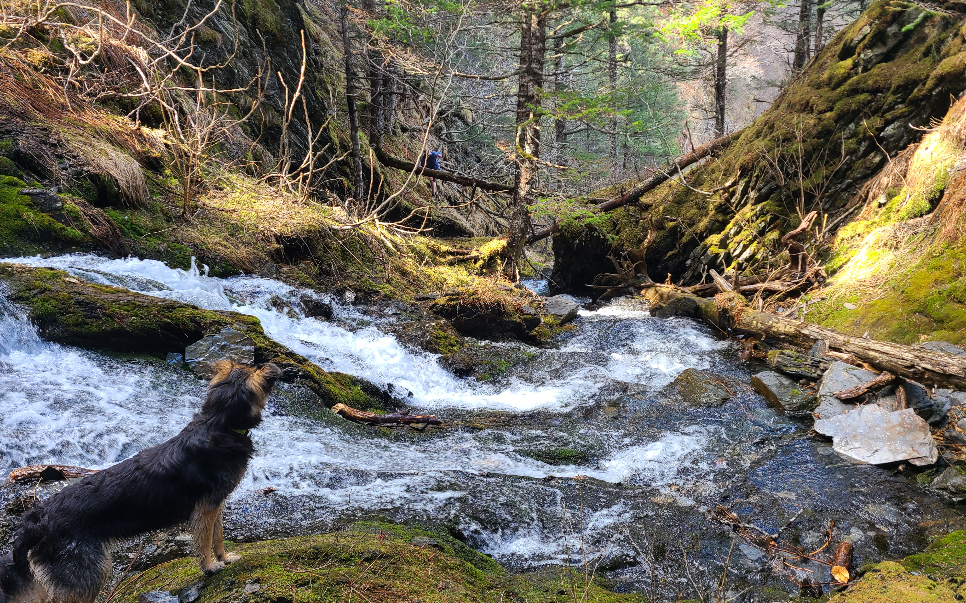
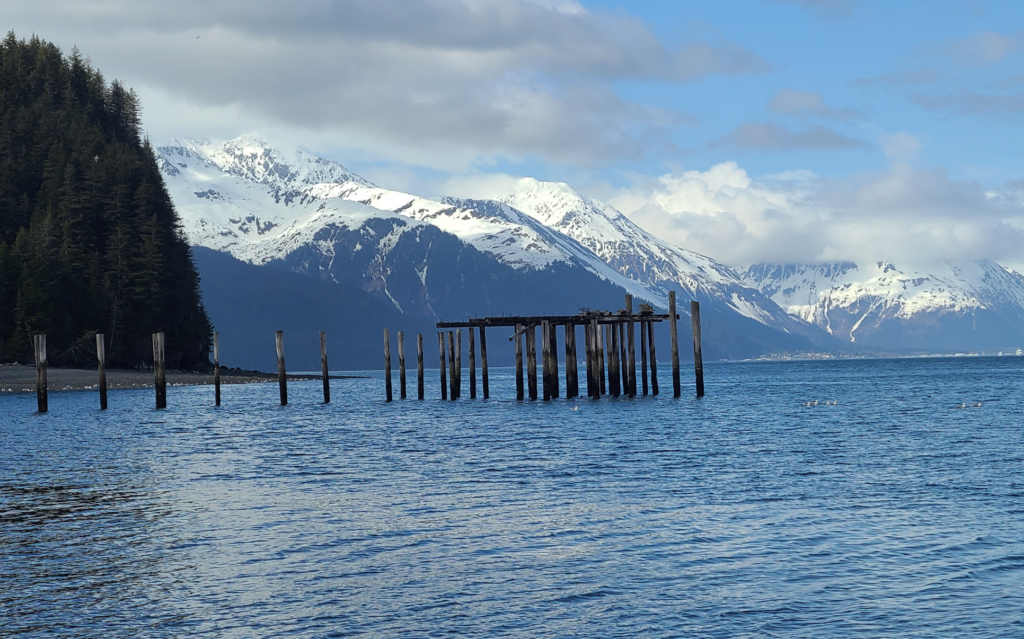
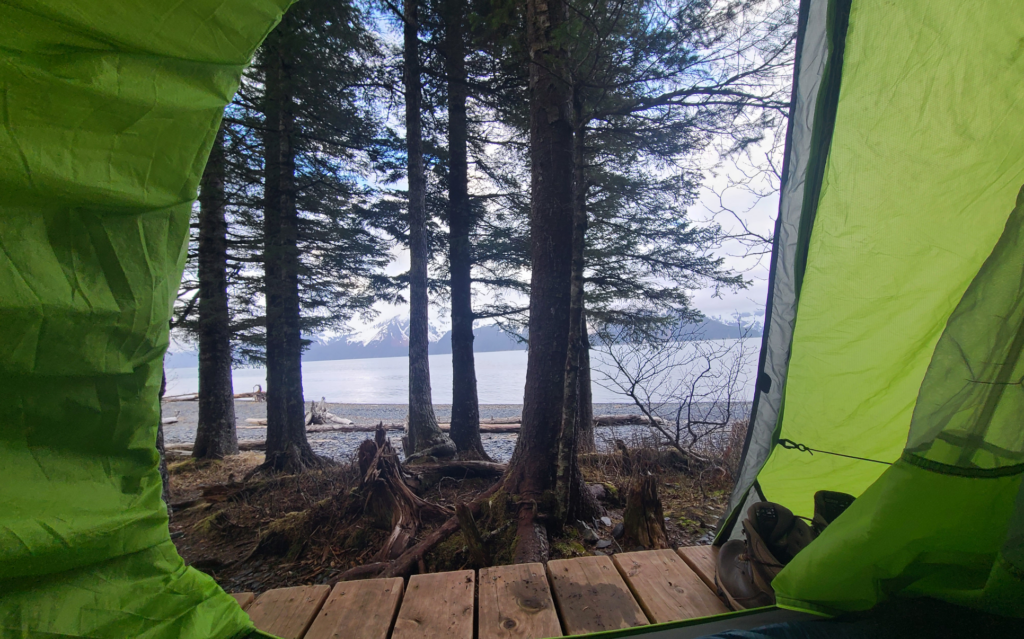
We hiked further down the beach, crossing small creeks, driftwood, and endless slippery beach rocks. We finally got to the North Beach of Caines Head State Recreation Area. There are two very nice wooden deck platforms for tents. Our view out of the tent was amazing!
During WW2, the Allies were concerned about Japan establishing a foothold in North America- specifically, in Alaska. In fact, the Japanese occupied two islands in the Alaska’s Aleutian Chain, Attu and Kiska, from June 1942 to May 1943. Japan’s occupation of these islands is historically significant because it was the first and only time that any part of the United States has been occupied since the War of 1812. Despite this, it was overlooked at the time because the invasion was at the same time as the Battle of Midway, and it is overlooked today because the occupation was of little consequence.
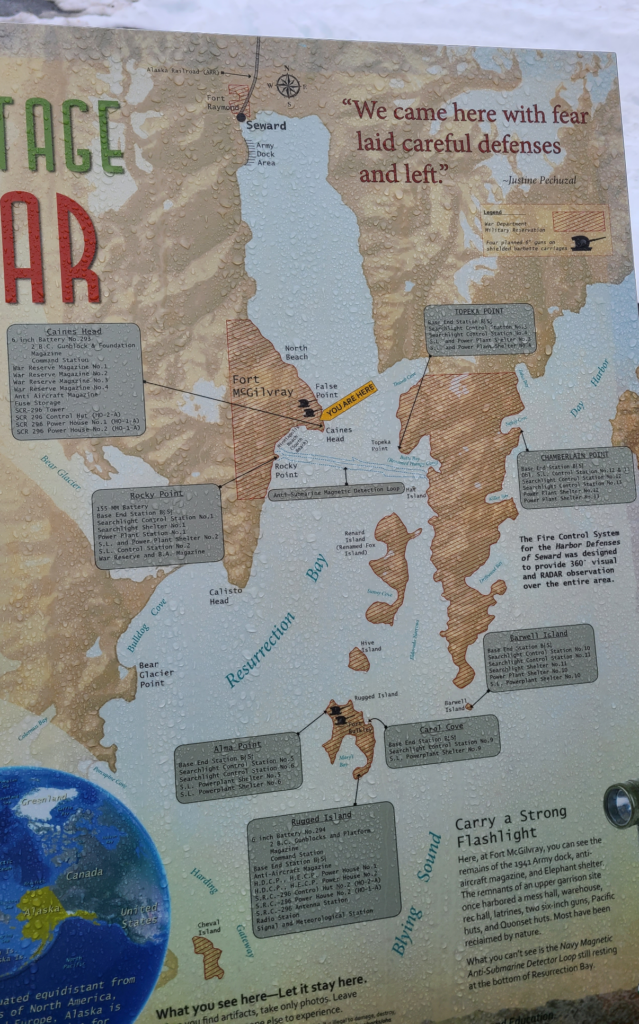
Seward, at the head of Resurrection Bay, was of vital importance to the Allied defense of Alaska because it is an ice-free port, and because it is where the Alaska Railroad terminated (the spur to Whittier, the other ice-free port, was not completed until April 1943). In June of 1941, troops started arriving in Resurrection Bay and soon began building fortifications. There were several military installations built in the southern portion of Resurrection Bay, but the installation at Caines Head, Fort McGilvray, was the headquarters.
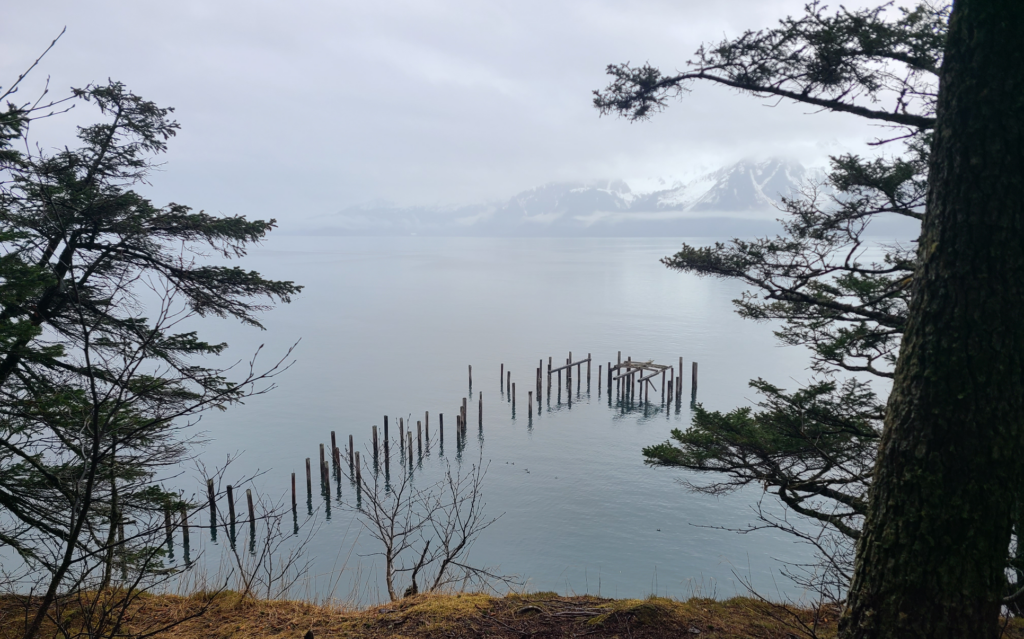
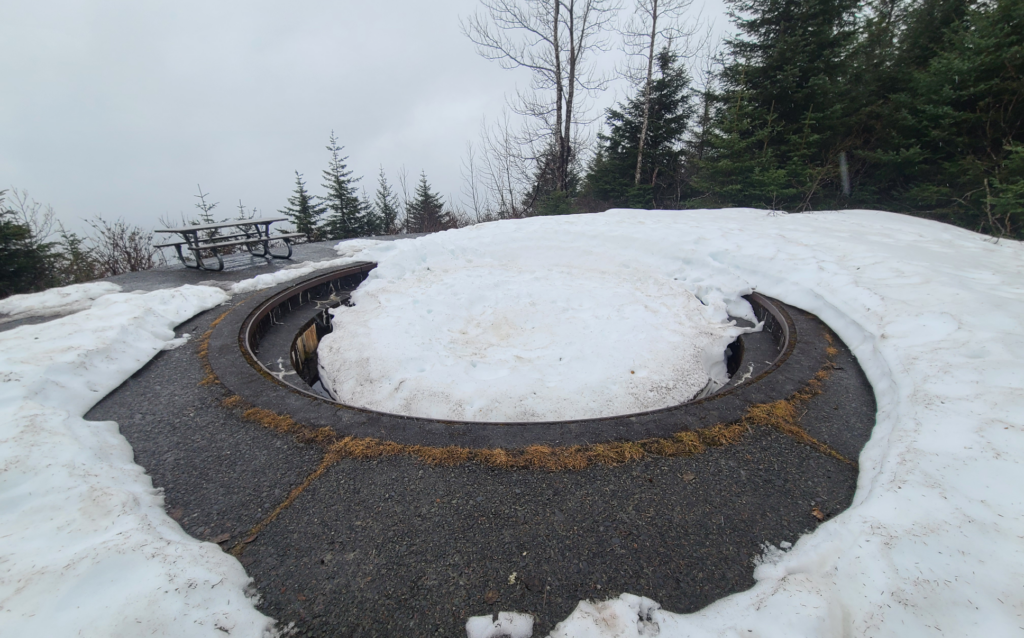
At North Beach, where we had camped, was a 40′ x 100′ wooden dock. Most of the decking is now gone, but the wooden piles remain 80 years later. A jeep trail was built up to the top of the hill south of North Beach. Men, materials, and equipment would offload at the dock and build a fort, complete with two ammunition magazines, two 155mm guns, a barracks, and many other buildings.
The trail from North Beach up to the fort is easy to follow- it is the old jeep trail, which is still in quite good shape after 80 years. We passed by the ammunition magazines and several other buildings on our way up to the fort. We had a great time wandering through the ruins, wondering what life must have been like at this outpost.
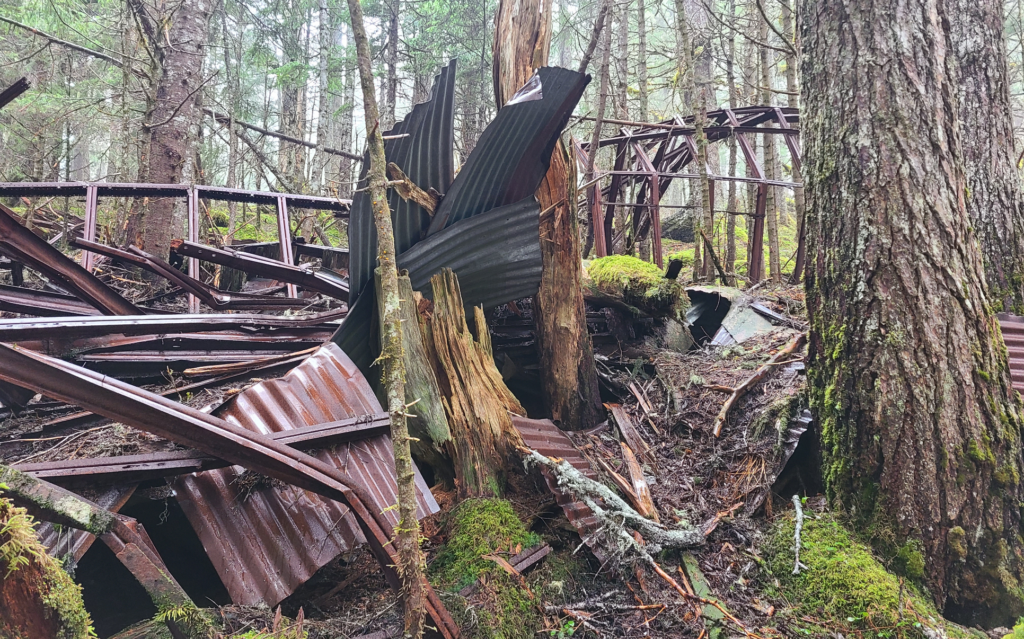

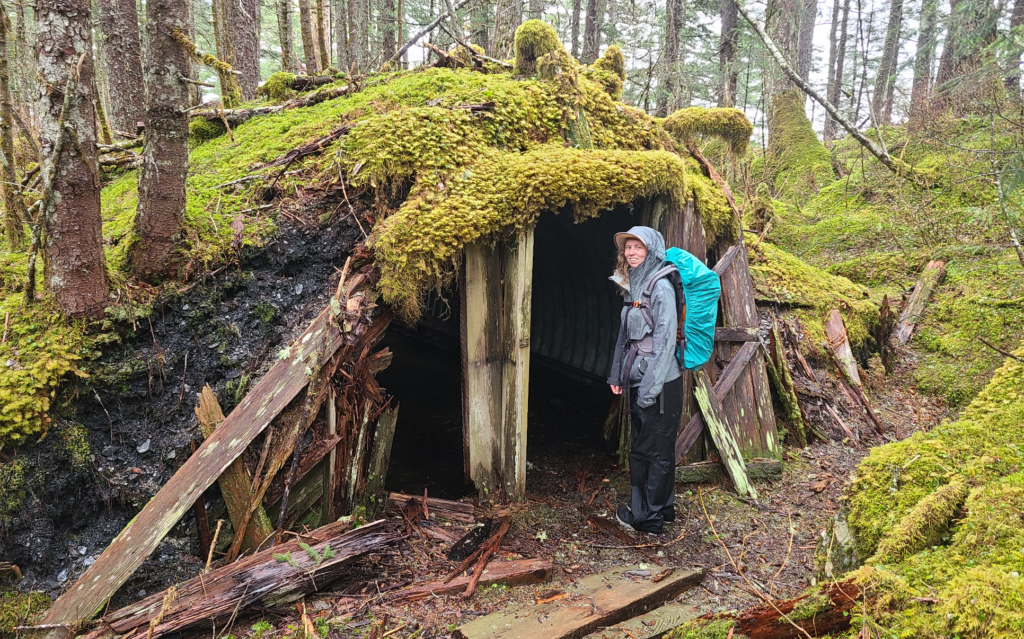
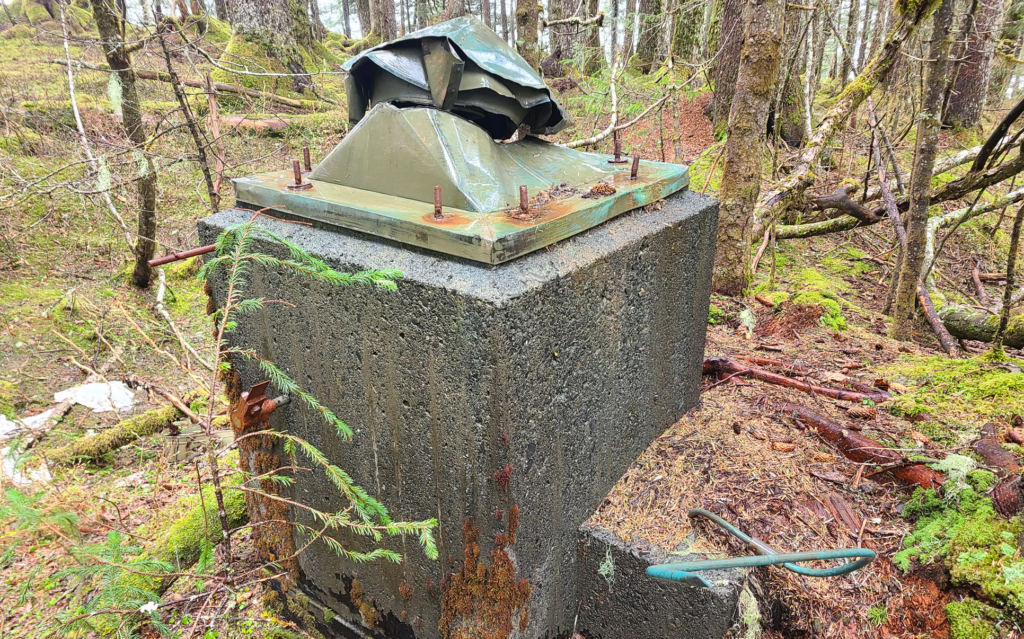
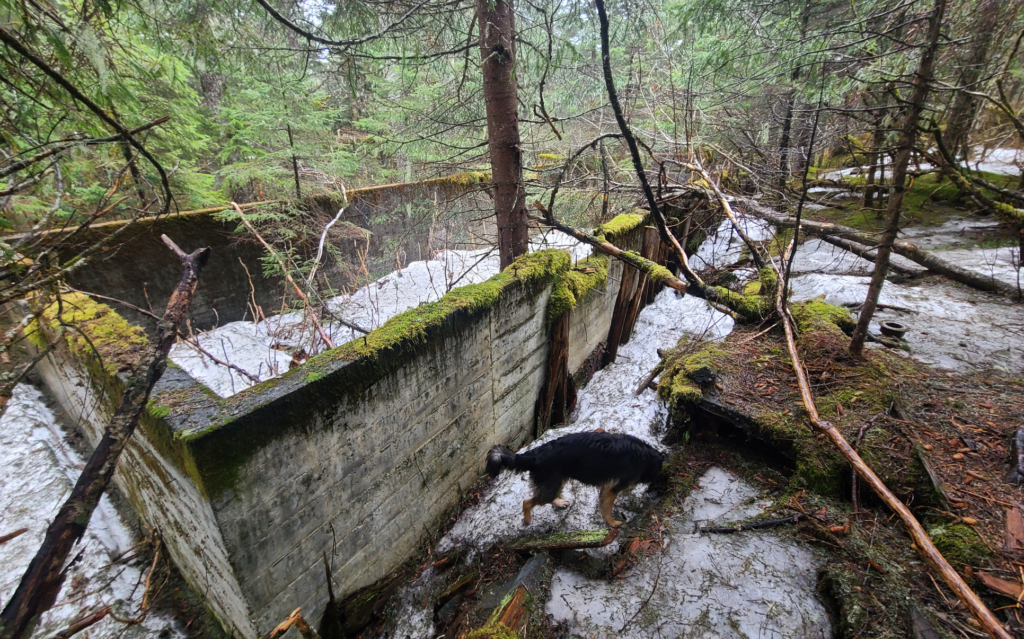
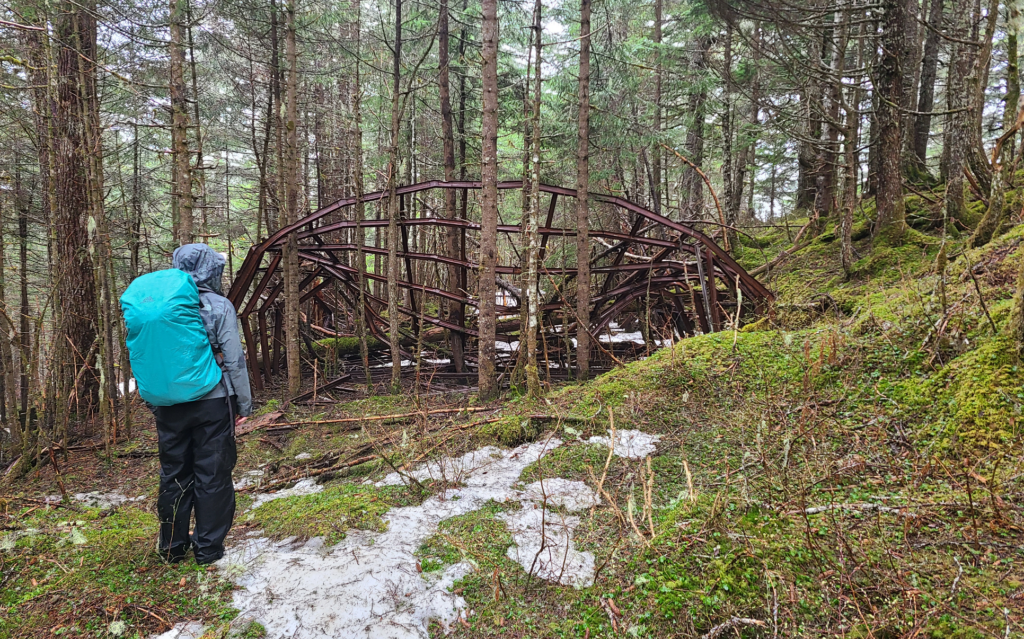
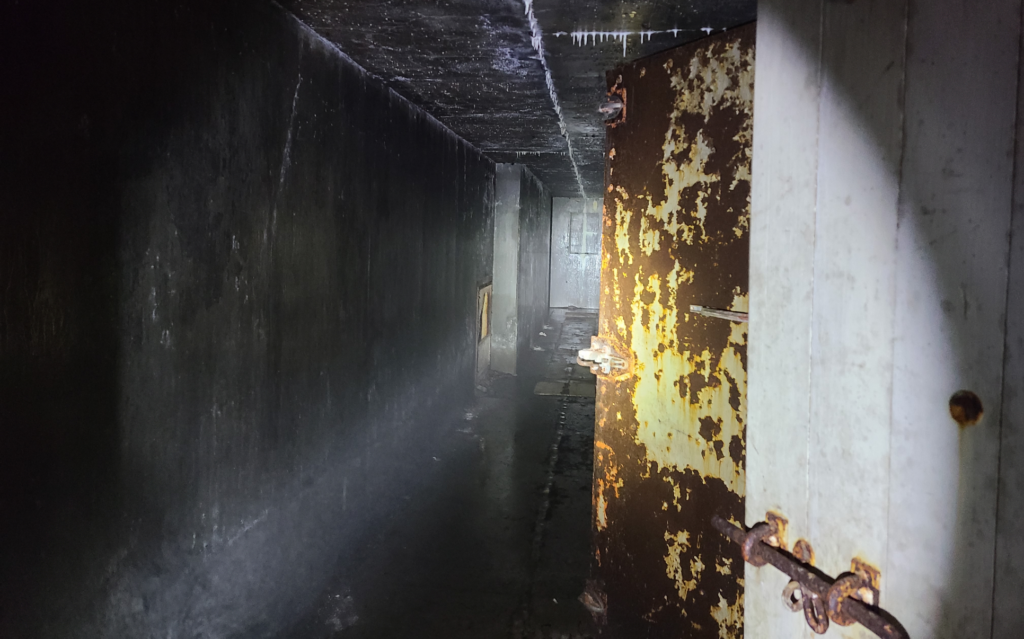
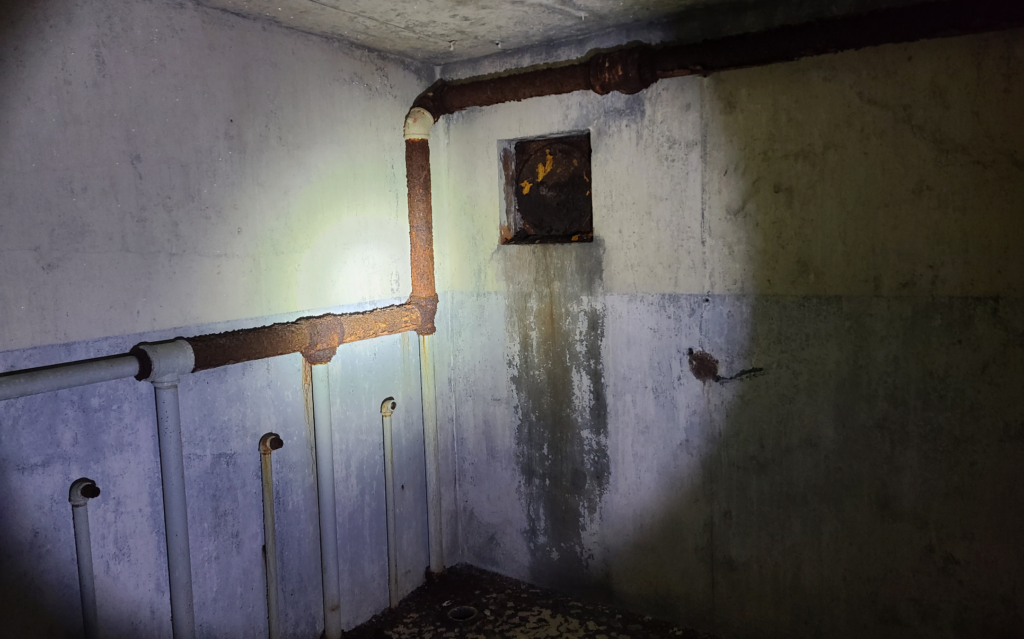
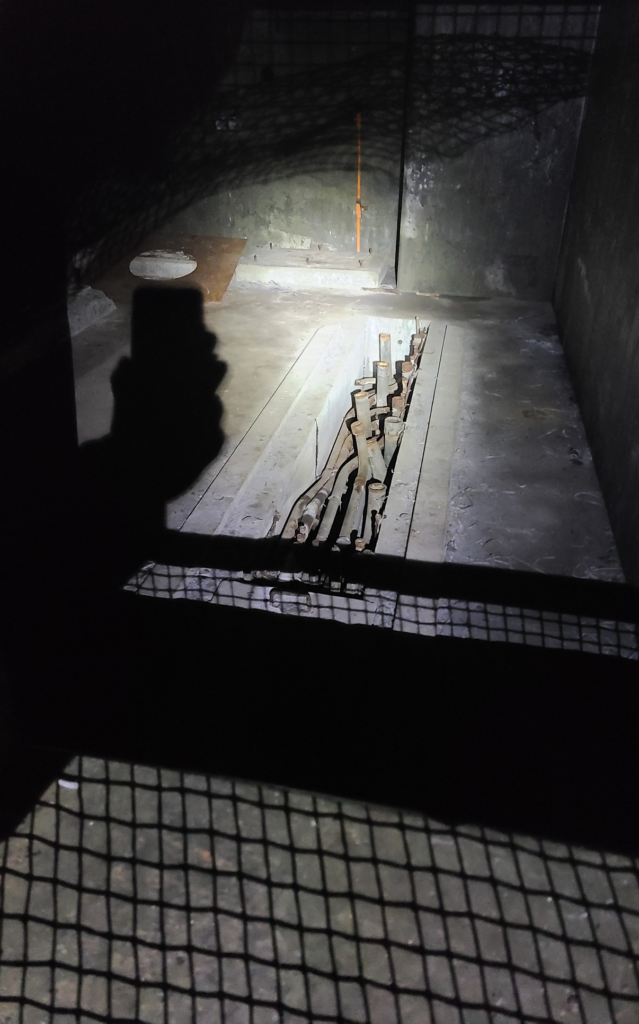
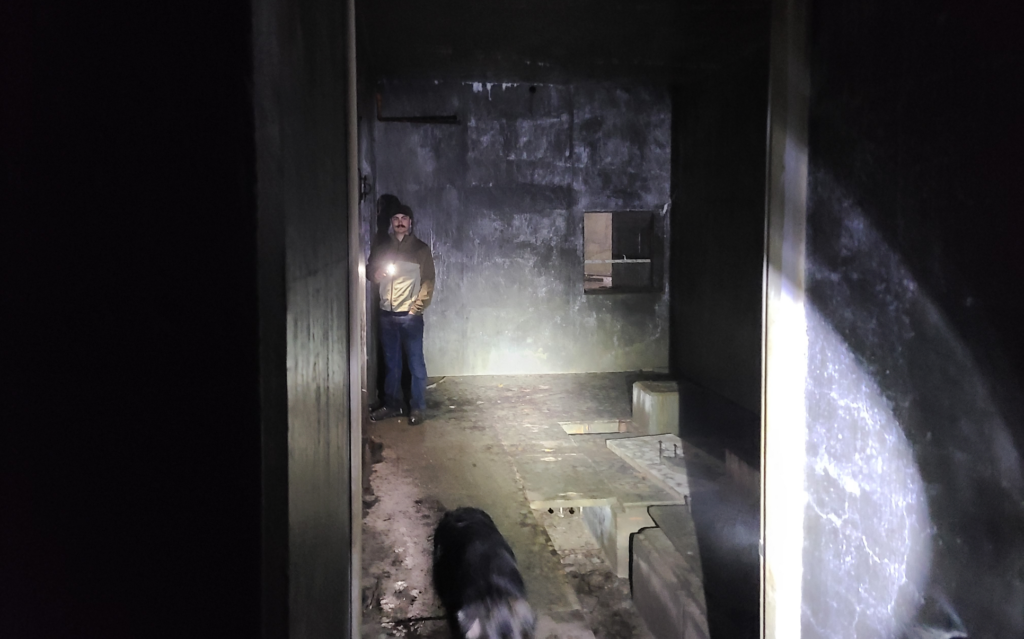
At the very top of the hill lies a very well-preserved fort. It is built mostly underground, with extremely thick concrete walls. There are only three entrances: the main door, and two side doors which each go to a 155mm gun emplacement. It is very dark inside- we were glad to have remembered flashlights and headlamps! There almost nothing of note left inside other than some piping- most was taken away when the military abandoned the post in 1944, when the threat of an Axis invasion of Alaska was much lessened. We spent over an hour exploring the old fort, and had it nearly to ourselves- one other group was walking in as we left.
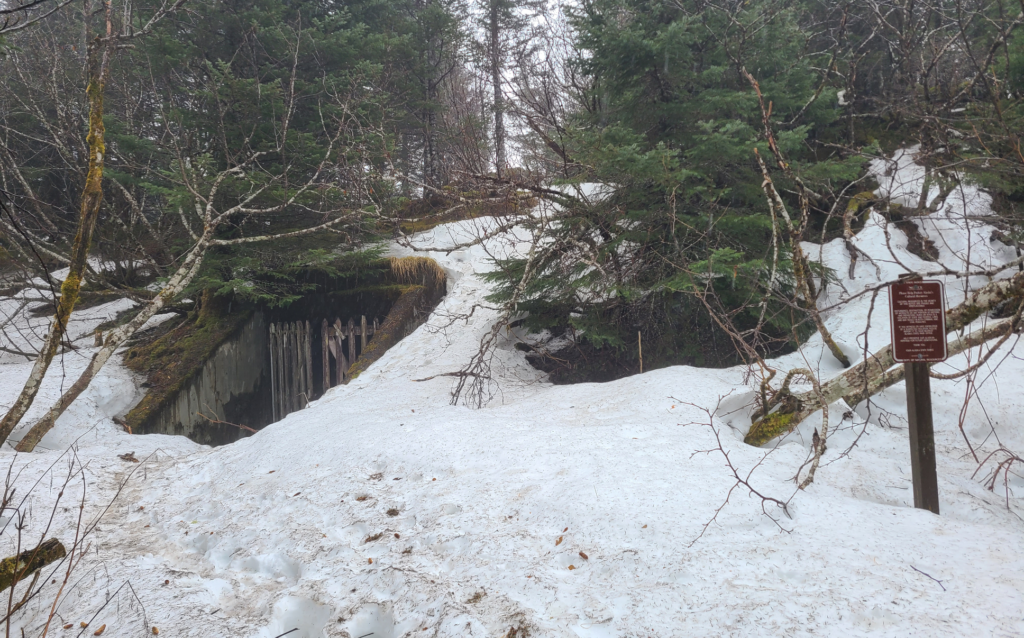
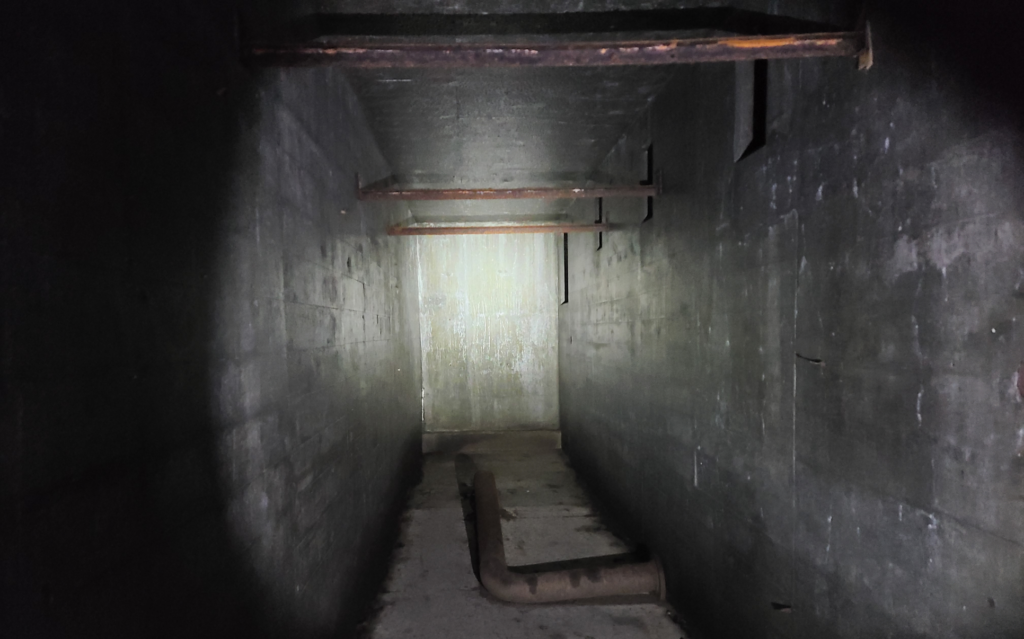
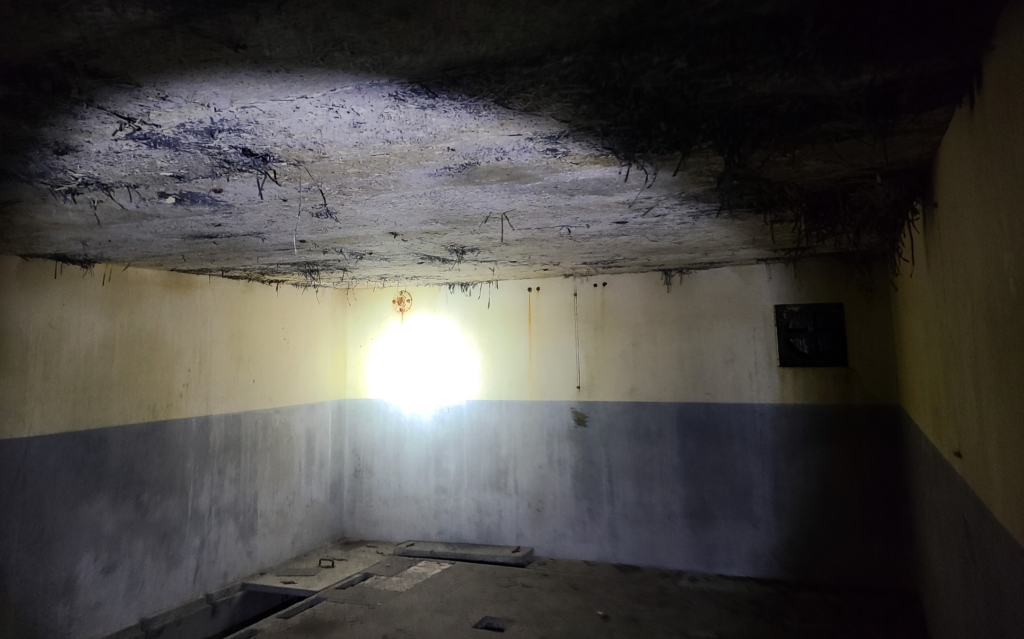
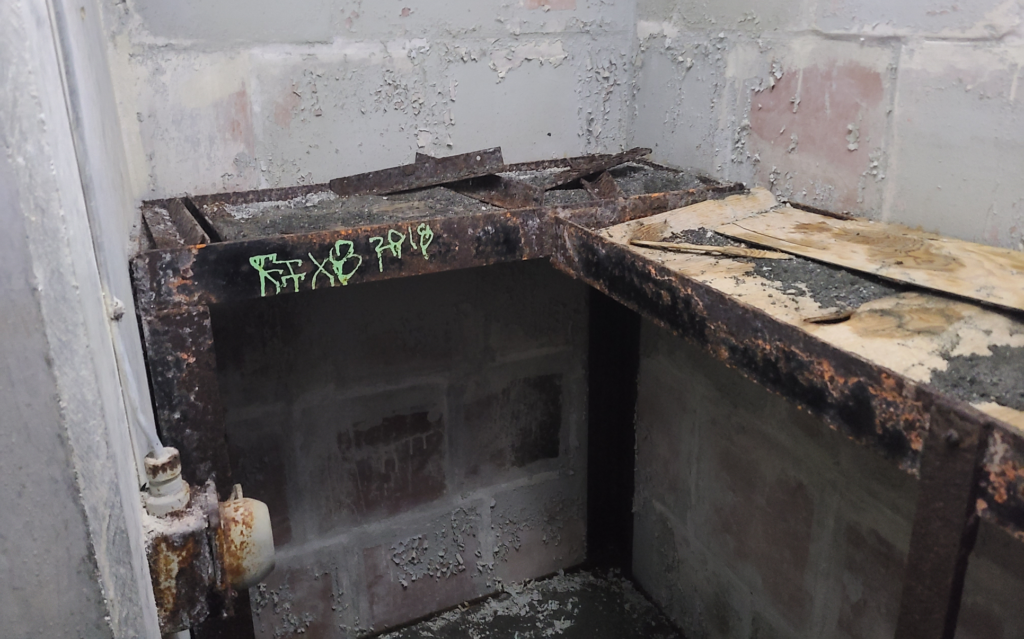
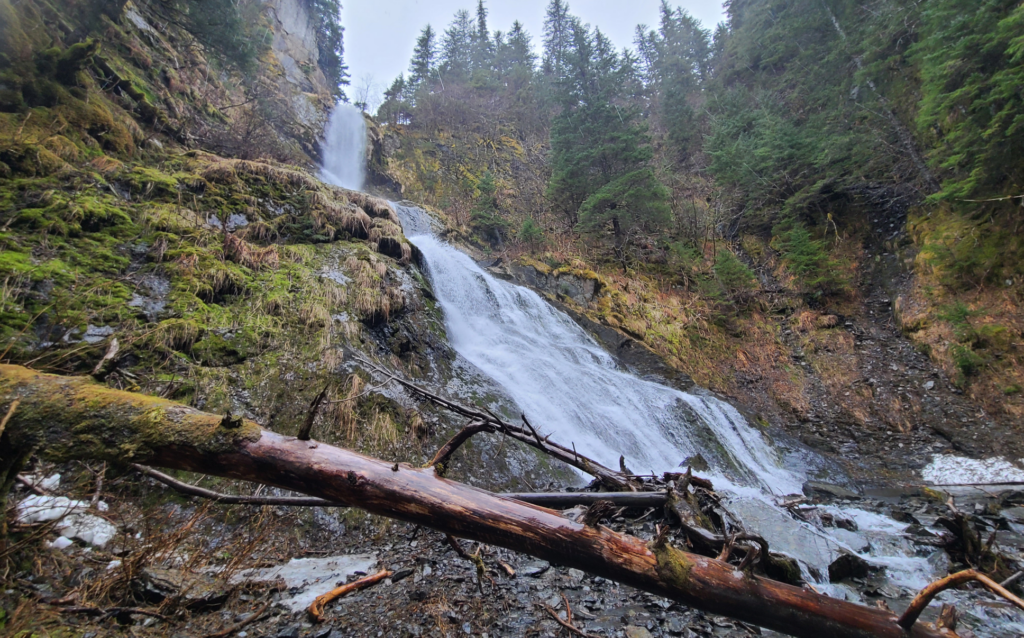
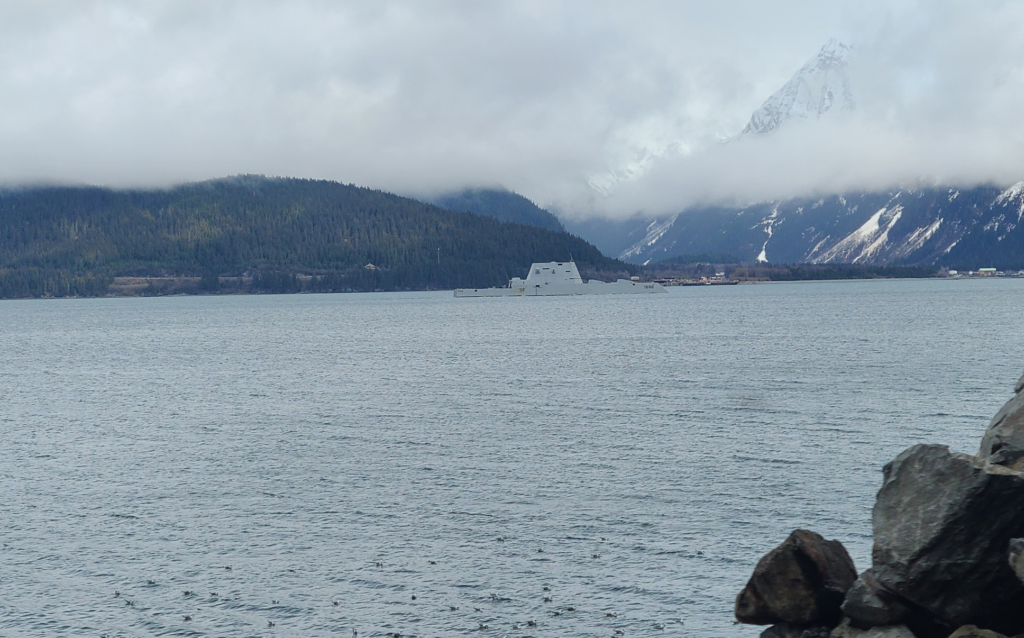
After thoroughly exploring the fort and the surrounding area, we hiked back down to our camp at North Beach and had lunch. The last few miles up to the fort had been snow, and we had hiked on an uneven beach all day the day before, so we took our time before packing up and hiking out. On the way out we noticed a beautiful waterfall that we hadn’t noticed on the way in- it was a few hundred yards up a creek. I remember finding a map with the name of the falls on it, but I can’t for the life of me find it now! We finally made it back to the parking lot at about 3:15pm. On the drive back into Seward, we noticed an unusual ship out in Resurrection Bay- it turned out to be the USS Zumwalt, a brand new Destroyer. It was an interesting contrast to the abandoned fort we had just been at.
All told, it was 6.3 miles to our campsite on the first day, 4.7 miles round trip to the fort and back to our campsite, and then 7.7 miles back to the parking lot- we took a few small detours on the way back. Not bad for hiking on either wet snow, sand, or slippery rocks for most of the way!
Delaney and I try to do a backpacking trip for her birthday every year and this was one of the best ones yet.